
Footbeds - It was never about your arch
Dynamic support is the key to better skiing. Here's why your footbed might be working against you.
It's not about matching your arch shape. It's about how your foot moves and whether your footbed moves with it.
You've invested in your boots. Maybe you've had them fitted properly, heat moulded, punched out in the right places. You might even have a pair of custom footbeds in there. And yet something still feels off. Not dramatically wrong. Just not quite right. A little dead through the turns. A little vague at the edges. Tired feet through the day.
Most skiers blame their technique. Their fitness. Their skis. It's rarely any of those things.
The real job of a footbed
Here's what actually matters inside a ski boot. Your heel sits at the start of a long biomechanical chain. When it rolls inward, a natural tendency called pronation, everything above it follows. Your ankle. Your knee. Your whole stance shifts slightly inside the boot, and you lose the clean edge engagement that separates good skiing from great skiing.
The job of a footbed is to stop that from happening. A well supported heel keeps you centred, keeps your lower leg tracking correctly, and makes it dramatically easier to move from edge to edge with precision and feel. Rearfoot control is everything.
But here's where most footbeds stop thinking. And where most skiers get let down.
Support is not the same as restriction
The standard footbed approach treats the foot as something to be held in place. Match the arch. Capture the shape. Lock it down. Whether it's an expensive custom mould or a well known drop in option like Superfeet or Sidas, (many designed for walking shoes) the logic is the same.
That works reasonably well when you're walking. In a ski boot, it works against you.
Skiing is a dynamic sport. Your foot is constantly loading, flexing, and responding to what the ski is doing beneath you. Around 85% of skiers experience measurable foot elongation just from flexing forward in the boot. The foot spreads and lengthens with every turn. A rigid mould shaped to your foot at rest is fighting that movement every single time you ski.
When your forefoot can't react, you don't just lose comfort. You lose feel. And feel is everything.
That vague, slightly deadened sensation through the turns? That's your footbed telling your foot to stop moving. Your foot is trying to read the snow. Your footbed is telling it to sit still.
The forefoot needs to function
Proper dynamic support separates two things that most footbeds treat as one. The heel needs to be held firmly and precisely, with geometry designed specifically for the inside of a ski boot. The forefoot needs to be free to respond. To flex. To load and release through the turn cycle the way skiing actually demands.
Get that balance right and everything changes. You stop fighting the boot. The ski starts to feel like an extension of your foot rather than something strapped to it. Edge feel sharpens. Fatigue drops. Those runs where everything flows stop feeling like luck.
That's not a coincidence. That's what dynamic support actually does.
Why most drop in footbeds don't get you there
Most footbed products on the market were never designed for ski boots. They come from the world of everyday footwear and get adapted into a completely different environment. The arch profile is borrowed from a shoe last. The support shape is built around walking biomechanics. The forefoot is rigid because rigidity is easier to manufacture and easier to sell.
The result is a footbed that gives you partial support in a context that demands something more complete. The heel might feel better. But the arch contact is narrower and shallower than a ski boot actually needs, so the foot still shifts under load. And because the forefoot doesn't flex, the foot can't do what skiing asks of it on every single turn.
This is not a small compromise. It is the reason so many skiers upgrade their footbeds and still feel like something is missing.
What Propa was built to solve
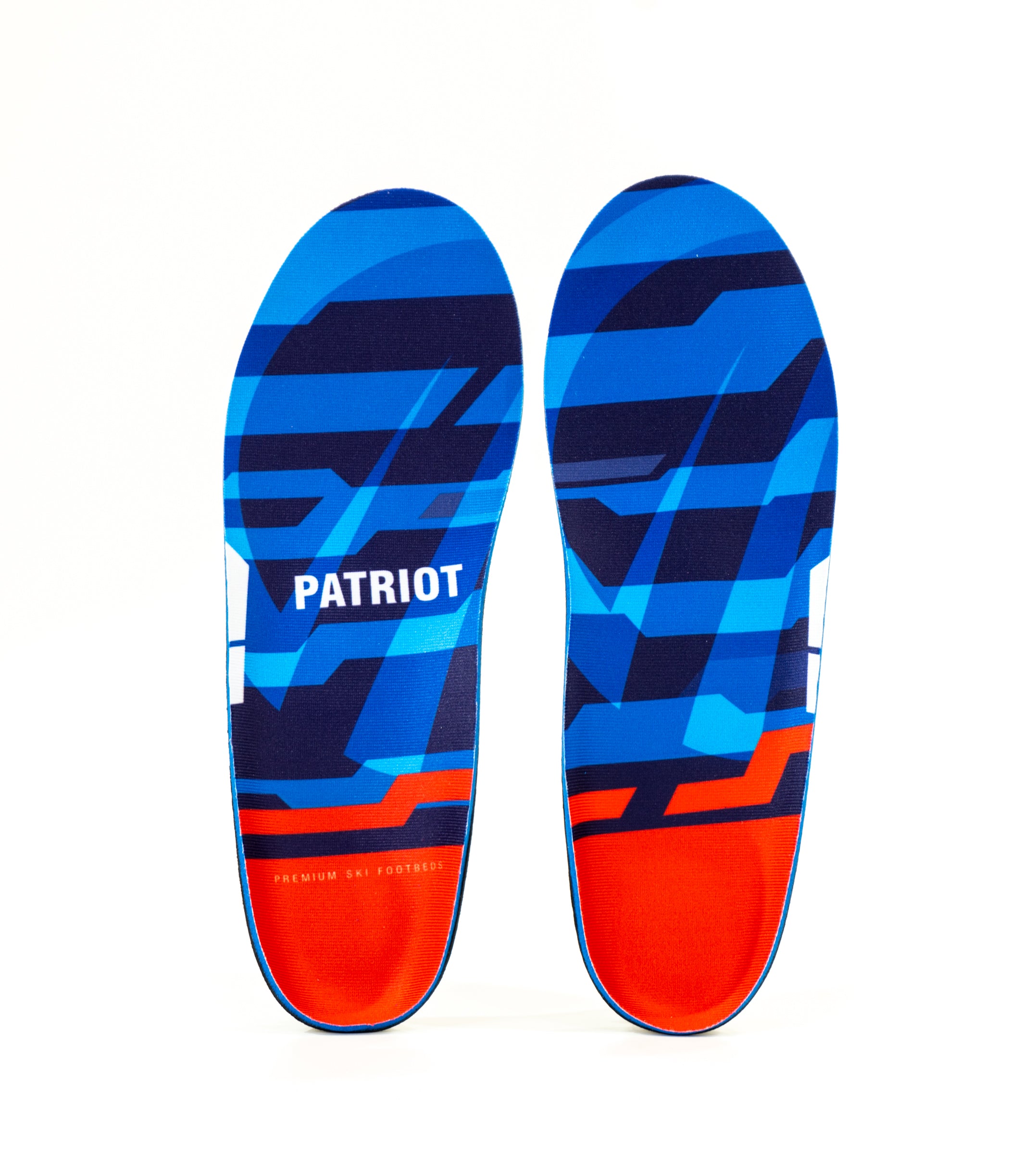
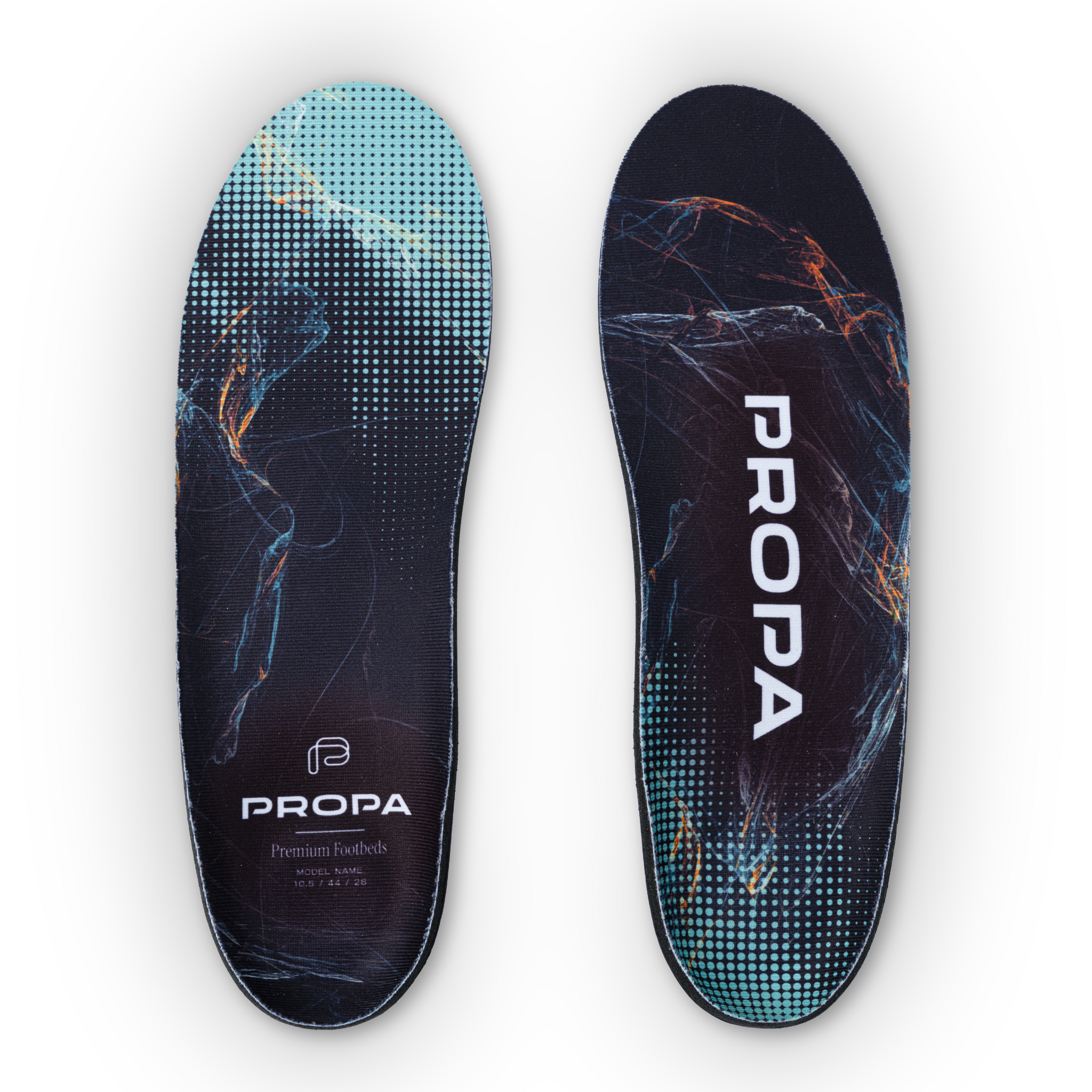
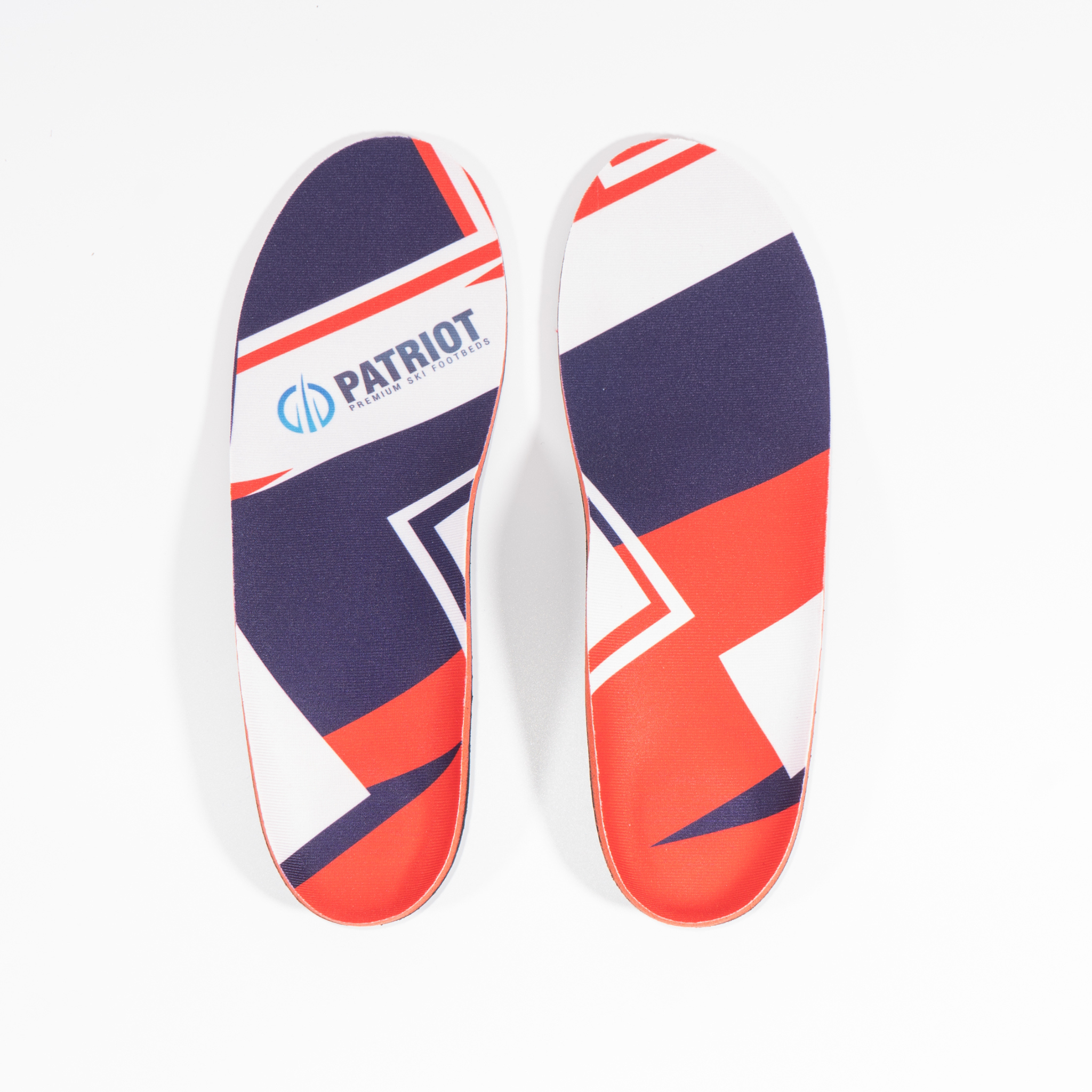
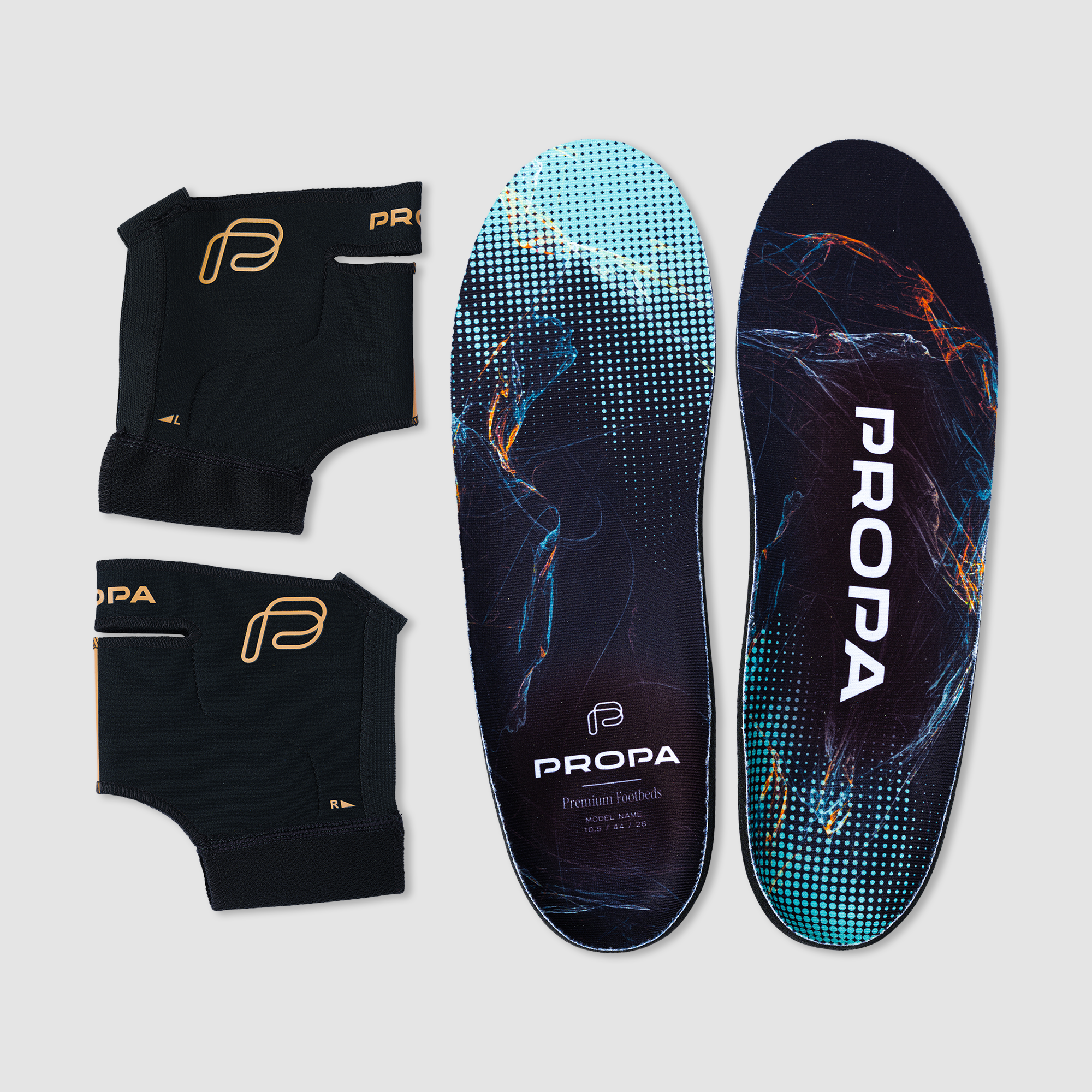
Propa footbeds were designed with one environment in mind. Not running. Not hiking. Not everyday use. Ski boots, and nothing else. That single focus changes every decision in the design.
The arch support is fuller and more complete than anything adapted from a shoe. It's shaped specifically for the way a ski boot positions the foot, filling the contact area properly so the foot is genuinely supported across its full profile rather than just at the highest point of the arch. That fuller contact is what gives you real stability through the whole foot, not just at the heel.
And the forefoot flexes. Deliberately and specifically. Not because it's soft or cheap, but because dynamic flex in the mid and forefoot is what allows the foot to load naturally through a turn, respond to the ski beneath it, and release cleanly on the way out. That responsiveness is where edge feel lives. It's what makes the boot feel alive rather than dead.
Fuller support. Dynamic flex. Built only for skiing. That's not a marketing line. That's the brief Propa was designed to answer.
The combination of those two things, a fuller ski specific arch shape and a forefoot that moves with you, is what separates Propa from every drop in option on the market. Most footbeds solve for comfort at rest. Propa solves for performance in motion.
Your setup is either working for you or against you
Every skier has felt the difference between a day when the boots feel dialled and a day when they don't. Most put it down to how they're skiing. The truth is almost always in the fit.
Rearfoot control gives you the stability to drive your skis with confidence. Forefoot freedom gives you the feel to do it with precision. You need both. Most footbeds give you one, or neither. Propa was built to give you both at once.
Better fit unlocks better skiing. It really is that simple.