Do I need Footbeds in my Ski Boots?
It's a fair question.
You buy a pair of ski boots, open them up and there's already an insole sitting inside.
So why would you replace it?
The simple answer is that the insole supplied with most ski boots isn't really designed to support your foot.
It's usually a thin, flat piece of foam designed to provide a little cushioning and a surface for your foot to sit on.
For some skiers in rare occasions, it can work.
But if you want your foot to feel more stable, connected and controlled inside your ski boot, a proper footbed can make a surprisingly big difference.
What Does a Footbed Actually Do?
A ski boot shell surrounds your foot, but it doesn't necessarily stop your foot from moving inside it.
Your foot can still spread, roll, twist and change shape as you load it.
A good footbed creates a more stable platform underneath the foot.
Most importantly, it helps support and locate the rearfoot and heel.
Think about standing on something soft and unstable compared with standing on a firm platform.
You haven't changed your foot.
You've changed what it's standing on.
That's fundamentally what we're trying to achieve with a ski boot footbed. - Give the foot a stable platform to work from.
What's Wrong With the Insole That Comes in My Ski Boots?
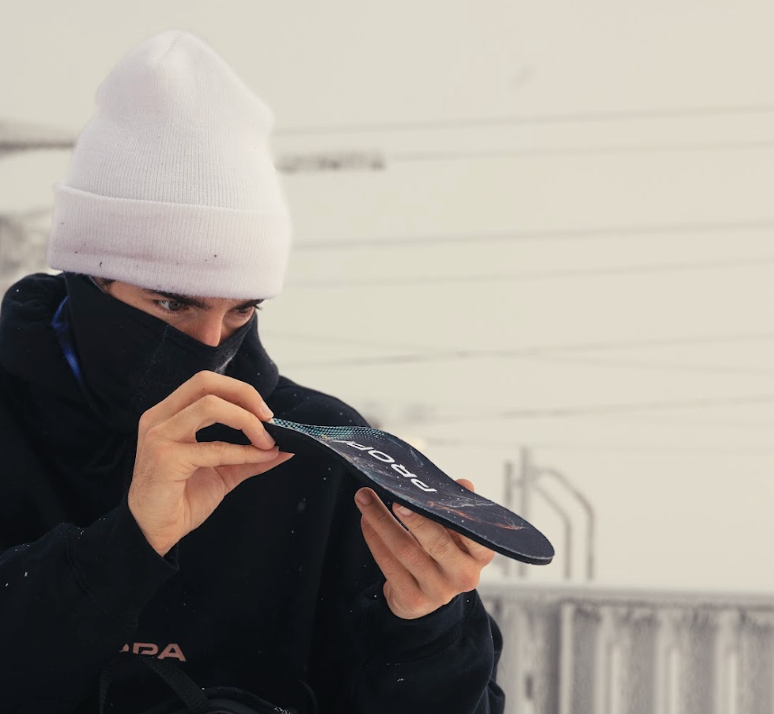
Take it out and have a look.
In most ski boots, the stock insole is little more than a few millimetres of flexible foam.
You can usually fold it in half with your fingers.
That's not necessarily because the boot manufacturer has done something wrong. Ski boot manufacturers need to accommodate a huge variety of feet, so the stock insole is generally kept thin, flexible and relatively flat.
But that means the stock insole offers very little structure underneath your foot.
When you ski, your foot is dealing with significant forces.
As you pressure the ski, your foot can spread and move inside the shell. The heel can shift laterally. Your arch can change shape. Your toes may grip as your foot tries to create stability for itself.
A structured footbed gives the foot something more stable to work against.
Isn't a Footbed Just About Arch Support?
This is probably the biggest misconception around ski boot footbeds.
People often assume:
High arch = high footbed.
Low arch = low footbed.
We don't think it's that simple.
The goal isn't to find something that perfectly fills every millimetre underneath your arch and holds your foot rigidly in one position.
Your foot isn't a static object.
It needs to function.
When you ski, there are small movements within the foot that contribute to balance, steering and your ability to interact with the ski.
If we simply block all of that movement with a rigid shape under the arch, we've potentially solved one problem and created another.
For us, the bigger priority is creating rearfoot stability and a supportive platform, while still allowing the foot to function dynamically.
That's why choosing a footbed should be about more than simply asking whether you have a high or low arch.
We've gone deeper into this in our Bootorial, Footbeds: It Was Never About Your Arch.
Will Footbeds Make My Ski Boots More Comfortable?
They absolutely can.
But comfort isn't just about adding more cushioning.
A lot of ski boot discomfort actually comes from movement and instability.
If your foot is moving inside the boot, you may compensate by overtightening your buckles.
Your toes may grip.
Your foot may spread into areas of the shell where there isn't enough room.
Your heel may move.
None of those things are particularly comfortable.
By giving the foot a more stable platform, a footbed can help reduce some of that unnecessary movement.
That can make the boot feel calmer and more secure without simply making it softer.
That said, a footbed isn't a magic fix for every uncomfortable ski boot.
If the shell is too small, the wrong shape, or there is a specific pressure point that needs bootfitting work, a footbed won't suddenly make those problems disappear.
Will Footbeds Make Me Ski Better?
A footbed will improve the connection between your movements and the boot.
Your skis only know what you tell them through your feet and your boots.
If your foot is moving around before those movements reach the shell, some of that input is being lost.
Stabilising the foot gives you a more consistent platform to work from.
The result can be a ski boot that feels more precise, more predictable and more connected to the ski.
It's not about locking your foot solid.
It's about removing movement that isn't helping you.
Do Footbeds Help With Heel Lift?
They can be part of the solution.
Your heel needs to be located both by the shape of the boot shell and by the liner around it.
But it also needs stability underneath it.
A good footbed cups and supports the heel laterally, reducing unnecessary movement at the rear of the foot.
That can improve heel security considerably.
However, if your heel is lifting because the shell is too large, your liner has packed out or you have too much space over the instep, a footbed alone may not solve the problem.
Heel lift is usually better understood by looking at the whole fit.
If heel movement is your main problem, we've covered it in detail in How to Stop Heel Lift in Ski Boots.
Do I Need Custom Footbeds?
Not necessarily.
For years, ski boot fitting has often treated a fully custom footbed as the ultimate solution.
There are some excellent custom footbeds, and there are certainly feet and situations where customisation makes sense.
But simply making something custom doesn't automatically make it better.
What matters is what the footbed is actually asking your foot to do.
A well-designed supportive footbed can provide rearfoot stability, heel location and a strong platform without needing to be individually moulded to every contour of your foot.
And if the footbed can be heat moulded, you still have the ability to adapt its shape where necessary.
The objective shouldn't be custom at all costs.
The objective should be getting the foot to function well inside the ski boot.
So, Do You Actually Need Footbeds?
There are people who ski happily on the stock insoles that came with their boots.
But take that stock insole out and ask yourself what it's actually doing.
If it's a thin piece of foam with almost no structure, then your foot is doing most of the work of stabilising itself inside the boot.
A good footbed gives it a better platform.
For skiers looking for more stability, better heel location, improved comfort or a more direct connection to their skis, it's one of the first things we look at.
And importantly, it doesn't need to completely immobilise your foot to do its job.
Support the foot. Locate the heel. Let the foot function.
That's what we're looking for.
Choosing a Ski Boot Footbed
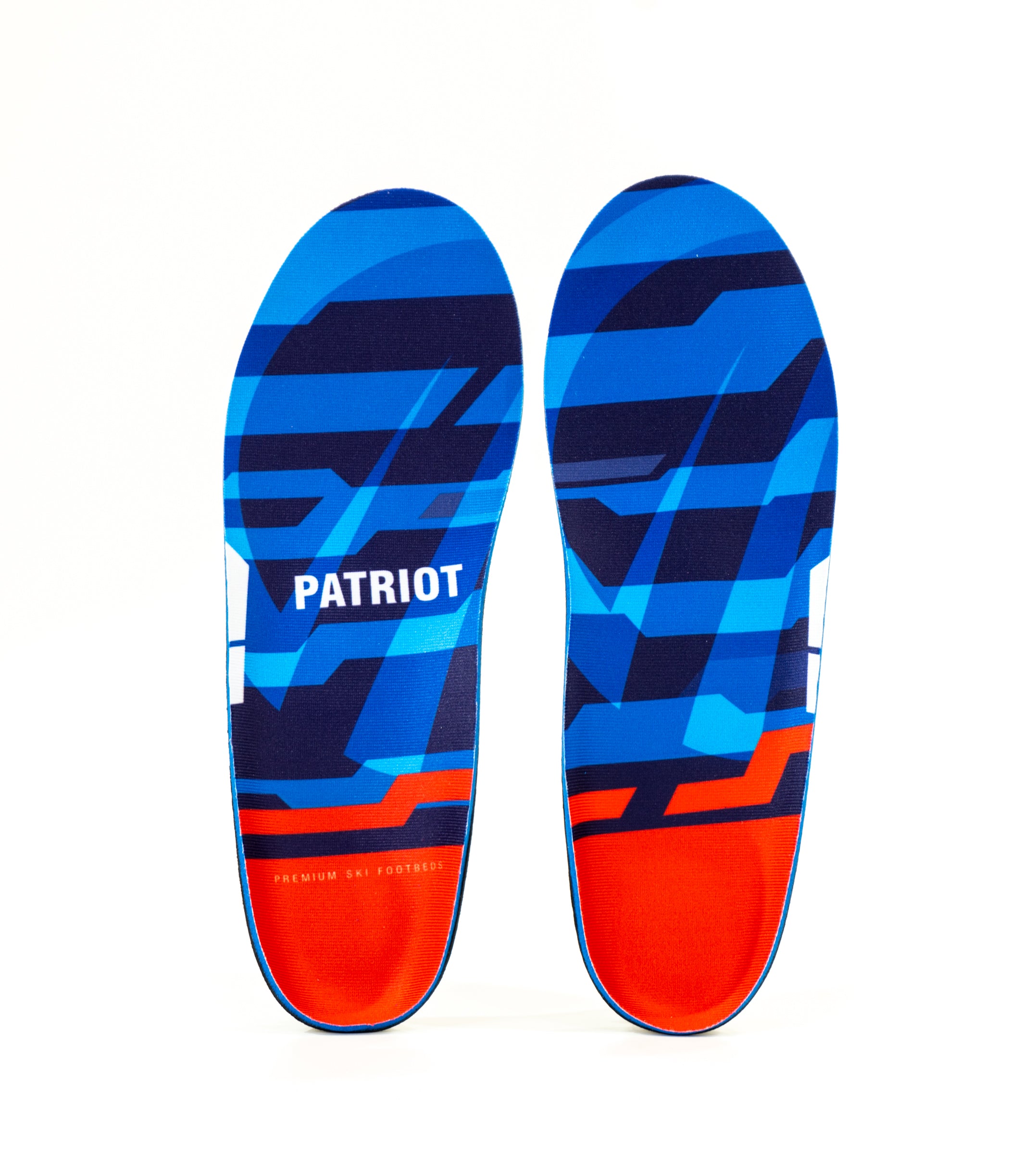
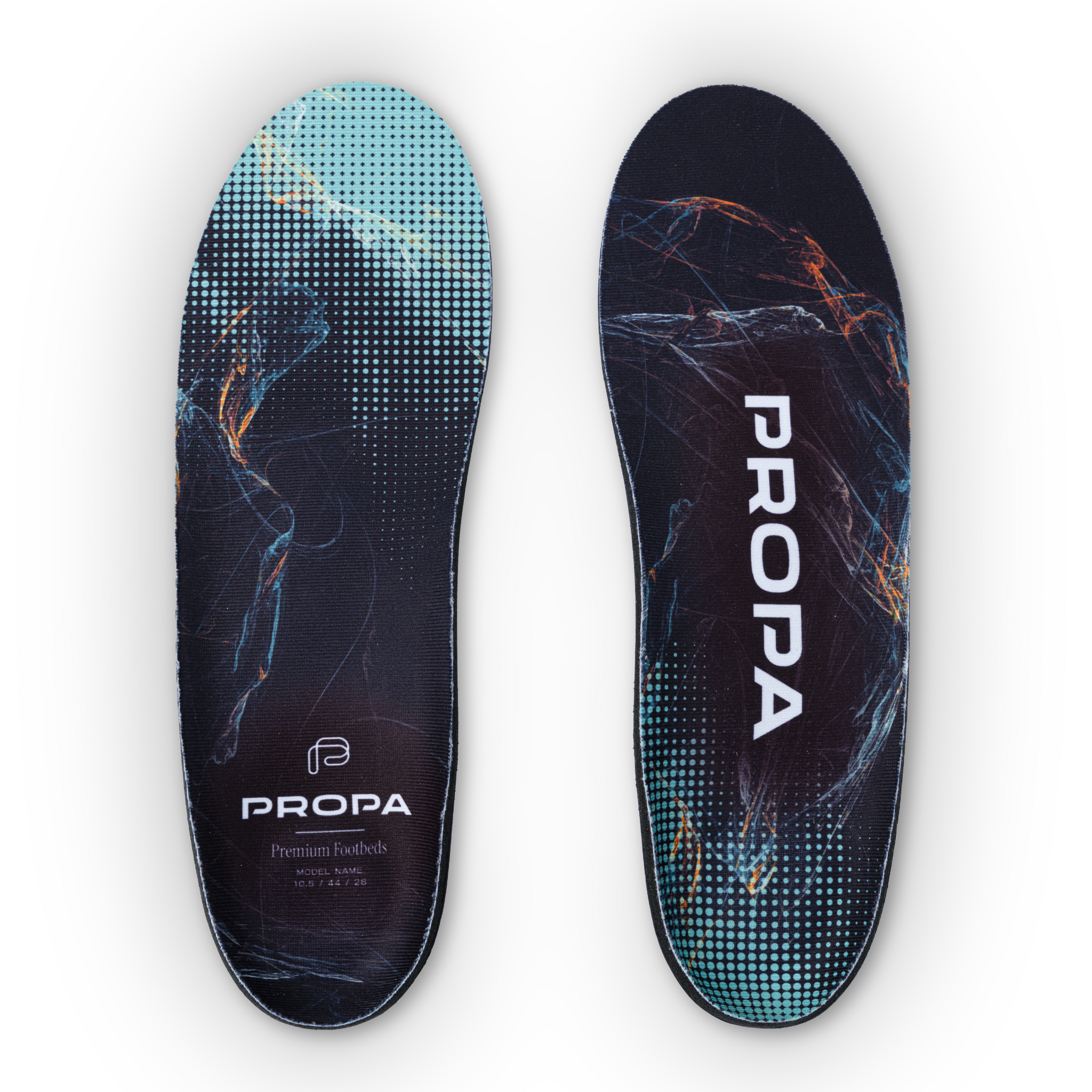
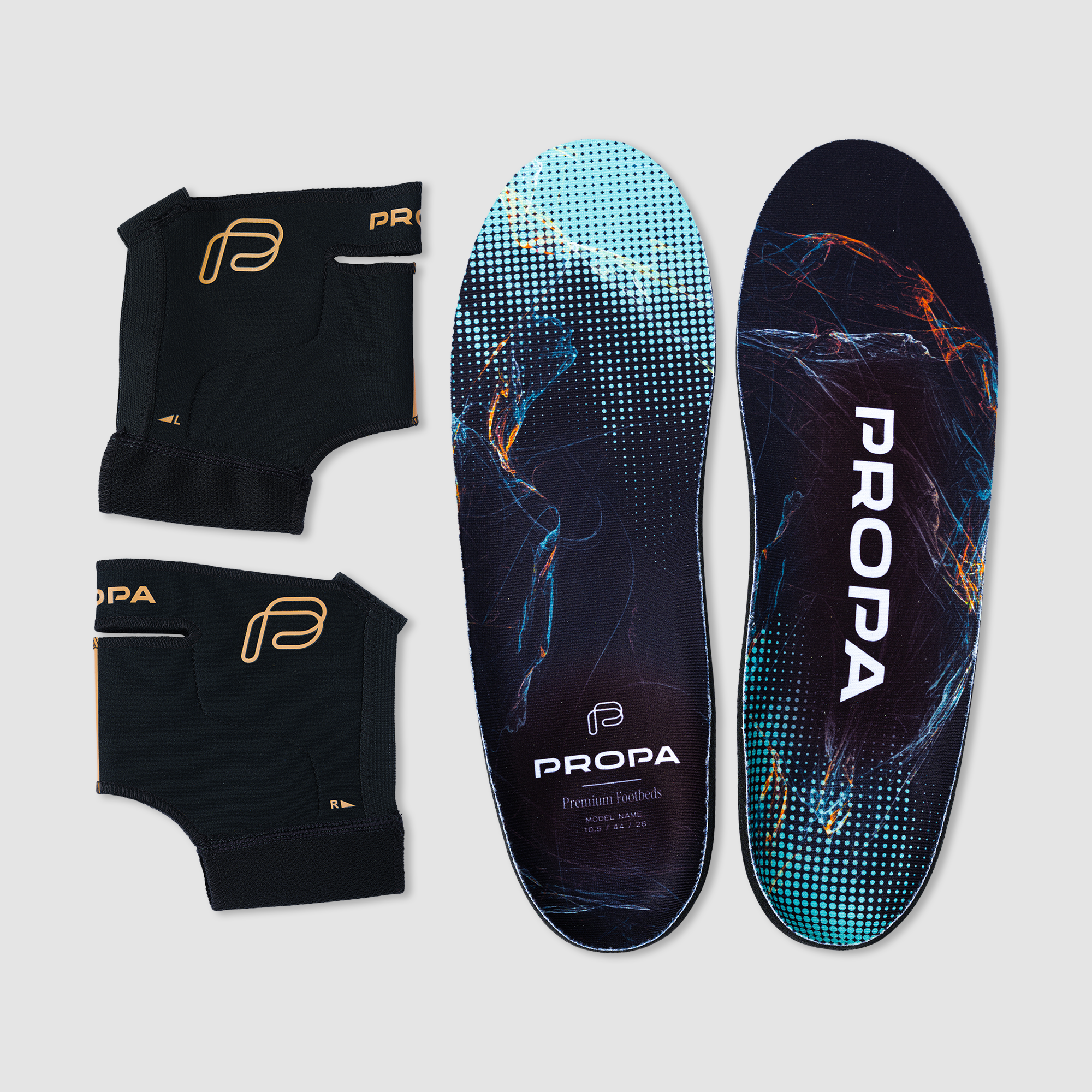
We designed Propa Footbeds around this exact philosophy.
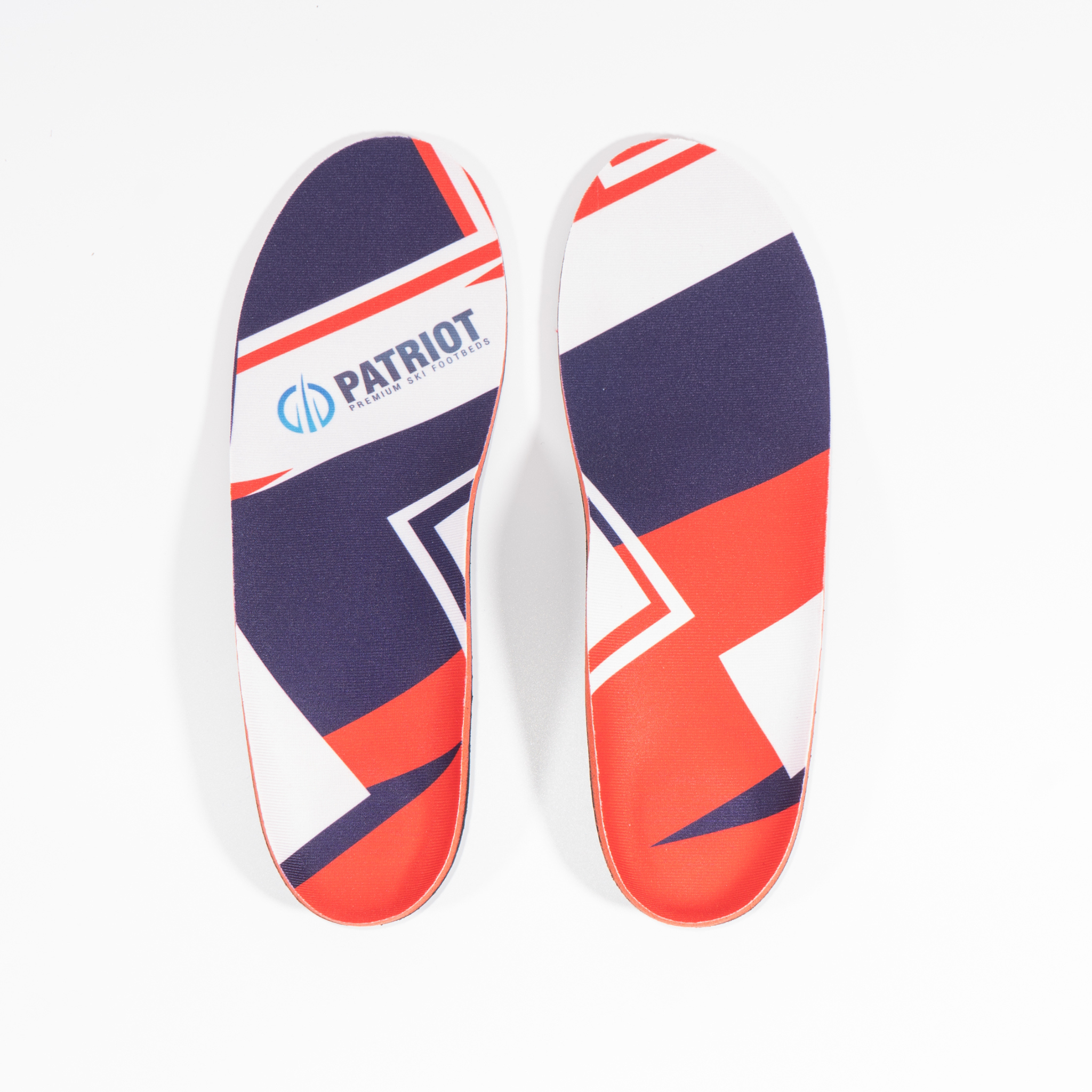
They provide structured rearfoot support and a defined heel cup while remaining dynamic through the foot. They're also heat mouldable, allowing the support profile to be adapted if needed.
The goal isn't to perfectly copy the shape of your arch.
It's to give your foot a better platform inside your ski boot.